At COMSAN, sustainability has been part of our DNA for more than six decades. It is neither a recent trend nor an isolated aspect of our business, but a commitment reflected in the way we design, develop and manufacture our products.
A good example of this is our manufacturing process for Versagrit® toilet seats, which combines our proprietary material formulation with technologies and material recovery systems that help us move towards a production model based on the principles of the circular economy.
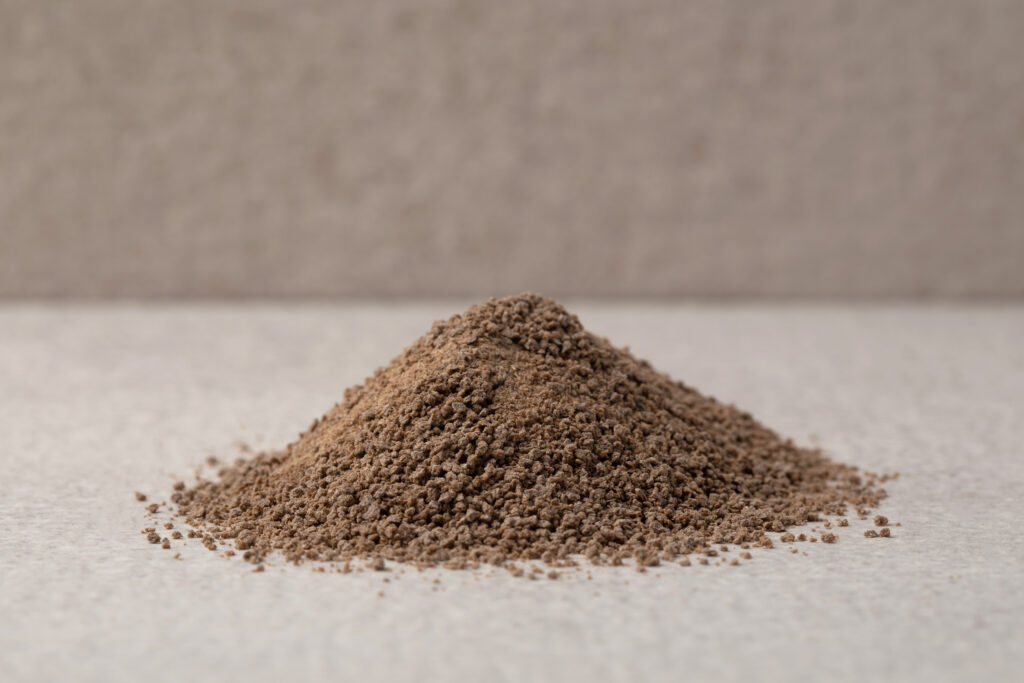
The starting point of our manufacturing process is Versagrit®, a material developed using COMSAN’s own original and exclusive formulation.
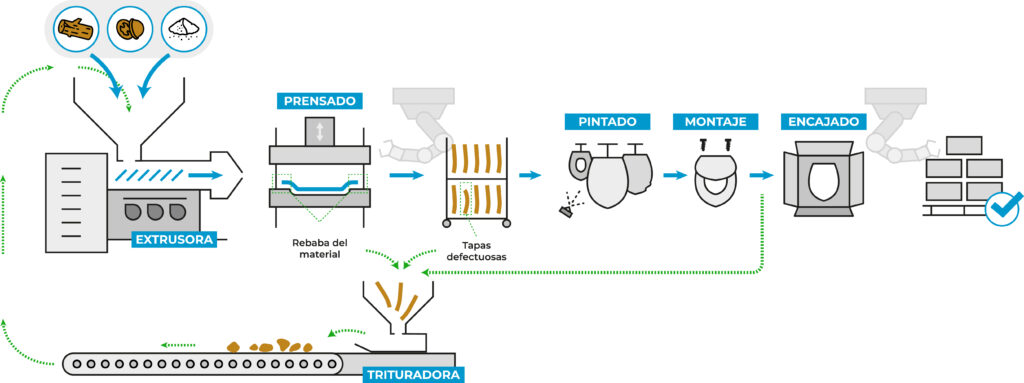
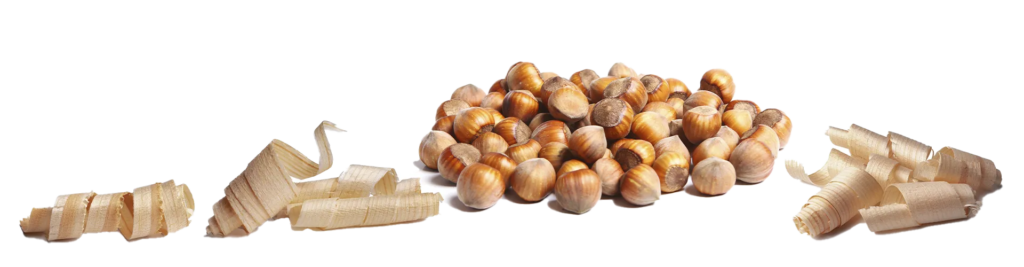
60% of its composition comes from plant-based, organic, recovered and recycled sources, as verified by independent certification body SGS. Its main components include wood flour and nutshells, which we make use of as valuable resources to create a material with unique properties in terms of strength, durability and versatility.
This choice of raw materials allows us to reduce our dependence on non-renewable resources and promote more efficient use of natural resources.
However, our commitment does not end with material selection. We also work to ensure that any surplus generated during the manufacturing process does not become waste, but can instead be given a new purpose within our own production cycle.
Thanks to Versagrit®’s properties, we manufacture toilet seats with an average lifespan of 20 years, thanks to their strength, high quality and the resistance of their finish to yellowing and colour changes over time. This helps significantly reduce our environmental impact.
One of the most important aspects of our sustainable production model is the recovery of surplus material generated during manufacturing.
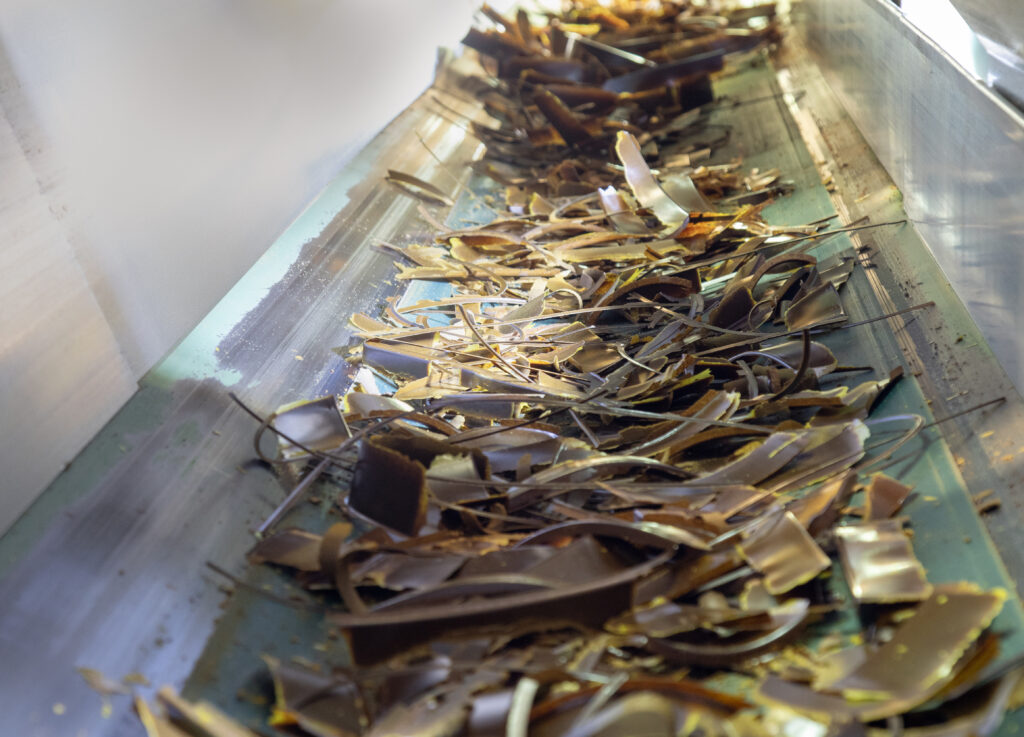
At COMSAN, we have developed specific machinery to collect surplus material produced at different stages of the manufacturing process. This material is then transported to a shredder, where it is processed so that it can be reintroduced into the raw material used to manufacture Versagrit®.
In this way, we recover virtually all the surplus material generated and prevent resources that still have value from becoming waste.
What Happens to Toilet Seats That Do Not Pass Our Quality Checks?
In any industrial manufacturing process, not every finished part necessarily meets the established quality requirements. At COMSAN, our first priority is always to try to recondition any products that can be recovered, with the aim of minimising waste as much as possible.
However, when a part cannot be recovered and fails to meet our quality standards, we do not consider it waste with no further use. Instead, we put it through a shredding process to recover the material and reintroduce it into the production cycle.
This means that toilet seats that cannot be sold are transformed back into raw material for manufacturing new Versagrit® material.
This system allows us to close the loop within our own facilities, giving materials a second life and reducing the need to use new resources.
Our commitment to sustainability goes beyond material recovery. We also work to reduce the carbon footprint associated with our industrial activities. In 2024, we reduced our carbon footprint by 36% compared to 2023.
Throughout 2024 and 2025, 100% of the electricity used at our facilities came exclusively from renewable energy sources, actively contributing to a cleaner and more sustainable future.
In addition, all our production facilities are equipped with solar panels, allowing us to use energy more efficiently and reduce CO₂ emissions by 385,729 kg per year. As part of this commitment, we also use energy management software (EMS) to monitor our energy consumption and identify opportunities to reduce it further.
To achieve this, we are committed to local manufacturing, working with nearby suppliers and vertically integrating our processes, from the production of raw materials and components to the manufacture of the finished product.
This model gives us greater control over the different stages of production, enables us to optimise resources and helps us continuously improve the efficiency of our facilities.

At COMSAN, we believe that sustainable manufacturing means taking responsibility for the resources we use and the way we transform them.
That is why we apply the principles of reducing, reusing and recycling in our day-to-day operations. From incorporating plant-based and organic raw materials into Versagrit® to recovering surplus material and recycling parts that do not pass our quality checks.
More than 60 years of experience have taught us that innovation and sustainability must go hand in hand. We continue to work towards improving our manufacturing processes, making better use of resources and developing solutions that contribute to a more efficient and responsible industry.